Happy Chinese New! Chinese New Year or the Spring Festival is a Chinese festival where people celebrate the start of a new year on the traditional Chinese calendar.
The way we celebrate Chinese New Year is not much of a difference from normal New year we had around the world, where you visit all your friends and family and wishing them best of luck in the coming year. One of the common and the best way to celebrate the new year with friends and family are definitely with foods, and I meant a lot of food.
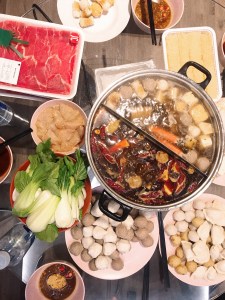
For most of the Chinese, cold weather means it’s hot pot season. Chinese hot pot is a glorious communal feast. Therefore, on Chinese New Year eve, my family gathered around and we had a Chinese hot-pot for dinner. The concept of hot pot is simple, you set a pot of simmering broth on a portable burner in the middle of the table. Around it, you can have many of your favourite food such as vegetables, meat, seafood, fish-balls and much more. When it’s all set up and ready to cook in the broth.
Another must-have for Chinese New Year is definitely dim-sum. Dim- sum is a style of Chinese cuisine prepared as small portions, and served in a steamer basket. Another fact is the dim-sum dishes are usually served with Chinese tea, such as Oolong, Pu-Erh, Chrysanthemum and Wu-long tea. These are the four popular tea that people often order.
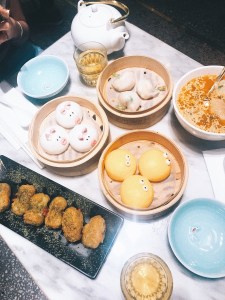
If you’re interested and want to try dim-sum in Colchester, Banquet worth the visit. I have put the details below:
Banquet
Address: 342 London Road, Colchester, CO3 8LT
Telephone: +44 1206 211588
http://www.banquet1408.co.uk/dimsum.html
To make me less guilty after a few cheat day on Chinese New Year, I want to share with you more interesting facts about healthy Chinese cuisine. If you’re interested, keep on reading;)
Chinese food philosophy
As you might know, I am from Hong Kong, and Chinese food is my absolute favourite. To fulfil my Chinese stomach, I often cook Chinese food into my diet. I love cooking Chinese food because there are a variety of cooking methods, such as stir-fry, boil, steam, deep fry, roast etc. Instead of deep fry, I prefer steam which is much healthier. For example, gyoza.
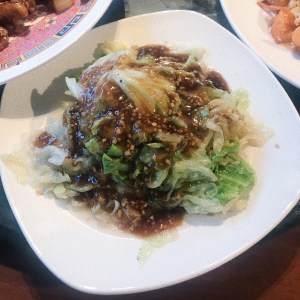
Fibre is an essential nutrient, adding the body’s digestion process. In Europe, I notice that vegetable are “add-on” to the side, but in Chinese cuisine, vegetables are put in central position. Also, in Chinese culture, we almost never eat salad (raw vegetables) like we do in Europe. Most people don’t get enough fibre, because they don’t enjoy eating bland vegetables. Chinese cuisine, however, is notable for offering many high-fibre meals that are perfectly seasoned and cook, leading it a more robust taste.
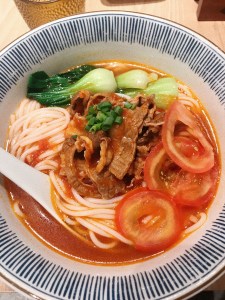
Chinese food offers a light meal option, instead of sandwiches I prefer soup noodle dishes. Which is very common on Chinese food menus and Chinese people love to have a bowl of soup noodles any time of the year. Soup noodles are easy to make, also it’s healthy and really filling. In one bowl, it often contains vegetables, noodle of your choice and meat or seafood, offering you nutritional balance. With other cuisines, it is difficult to find a meal that incorporates all nutritional elements in one dish. However, to make a healthy soup noodle, the choice of noodles is the key. You should avoid using instant noodles, which means noodle that has been fried. Healthier options such as rice noodles, undo or shirataki noodles.
The Chinese philosophy on food and health is that food can actually be made into a beneficial medicine, what they call food therapy. A dish of healthy Chinese food heavily relies on spice and herbs to prepare meals that promote health and treats disease. All the spice have its unique spice and taste, which makes each dish of Chinese food so unique. It is sort of a Chinese style of healthy eating.
Health benefits of Chinese spice/ herbs:
1) Ginger has a very long history of use in various forms of traditional medicine. It has been used to help to fight the flu, common cold etc.
2) Garlic is a plant that has a similar breed as onion, that’s grown for its distinctive taste and health benefits. Garlic is low in calorie and rich in vitamins C, vitamins B6 and manganese.
3) Coriander is a wonderful source of dietary fibre, iron and manganese.
4) Chilli pepper is primarily used to add extra spices in food, and it has been associated with several health benefits. Chilli may promote weight loss when combined with other healthy lifestyle strategies.
Once again, Kung Hei Fat Choi and Happy Chinese New Year.
 FITNESS HANDLES.